 AED 150
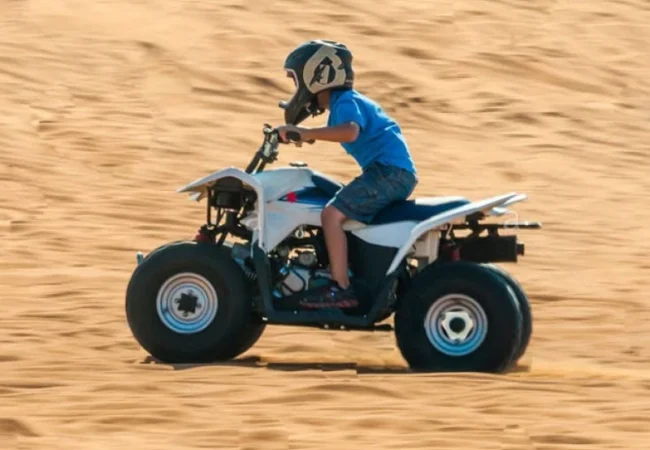
Yamaha 90cc — kids
- Ages 9–12
- Supervised
- Own track
Its own marked loop at the edge of the main dune field, away from the adult riders, with a guardian on site the entire time.
Book this quad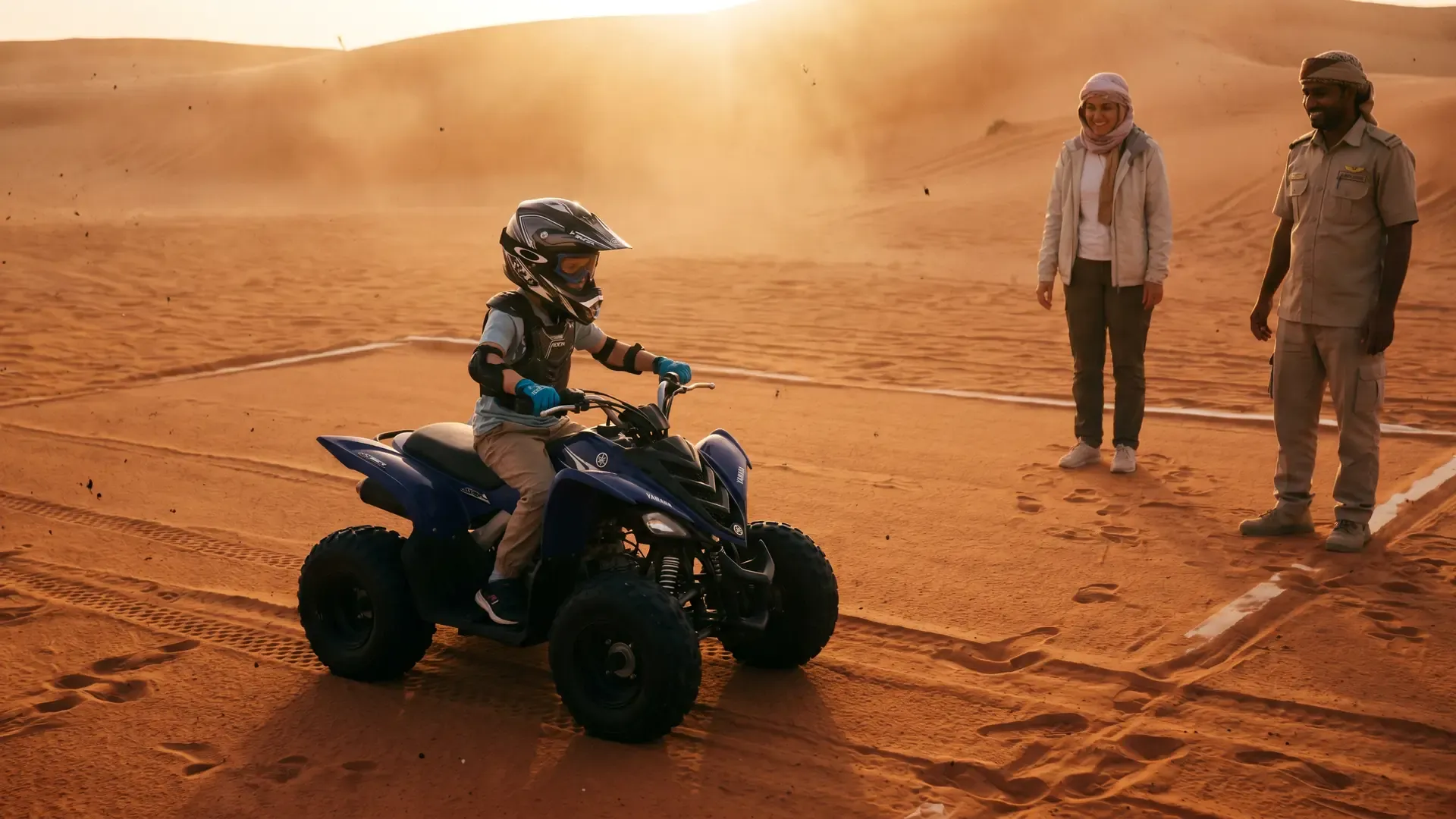
Al Lahbab is the site: deep red dune reached off the Dubai–Al Ain road, a fair distance past the paler ground closer to the highway that shows up in most tourist photos. Eight Yamaha machines are lined up and waiting, one rider to a quad, spanning a supervised 90cc built for kids all the way to a Raptor 700cc that only goes out after a quick screening chat.
There is only one location involved: Al Lahbab, a deep red dune field you reach by following the Dubai–Al Ain road inland, well apart from the paler sand behind most desert-safari marketing shots nearer the highway. Adult pricing begins at AED 200 with the Yamaha 220cc and climbs to the Raptor 700cc at the top of the range, AED 795, while the 400cc in between draws the largest share of bookings at AED 250. Kids get their own track too, a 90cc loop for nine-to-twelves, supervised for its entire length.
Every row below is a seat at the same staging ground, not a different site for a different budget. It is one rider per machine except the 400cc double, built to seat two people for a single combined charge. Details get confirmed on WhatsApp, then payment online holds the slot.
| Machine | Who it is for | From |
|---|---|---|
| Yamaha 90cc | Ages 9–12 on the supervised track, a guardian on site throughout. | AED 150 |
| Yamaha 220cc | The first adult machine most people try. Soft throttle, easy to correct. | AED 200 |
| Yamaha 400cc | Where most riders land. Enough torque to climb without a fight. | AED 250 |
| Yamaha 400cc double | One machine, two seats, a single fee for the pair. | AED 350 |
| Yamaha 400cc turbo | Same frame as the standard 400, more push out of a bowl. | AED 350 |
| Yamaha Grizzly 450cc | Heavier utility build. Steadier on rough ground and longer routes. | AED 450 |
| Sports quad 625cc | Lighter and sharper, built for riders who already have quad time in. | AED 700 |
| Yamaha Raptor 700cc | The quickest machine on site, handed over after a short screening chat. | AED 795 |
Nothing here is a different location for a different budget, only a different amount of machine under you. Start with how much throttle experience you actually have, not the engine number, and the right one gets easier to spot.
AED 150Its own marked loop at the edge of the main dune field, away from the adult riders, with a guardian on site the entire time.
Book this quad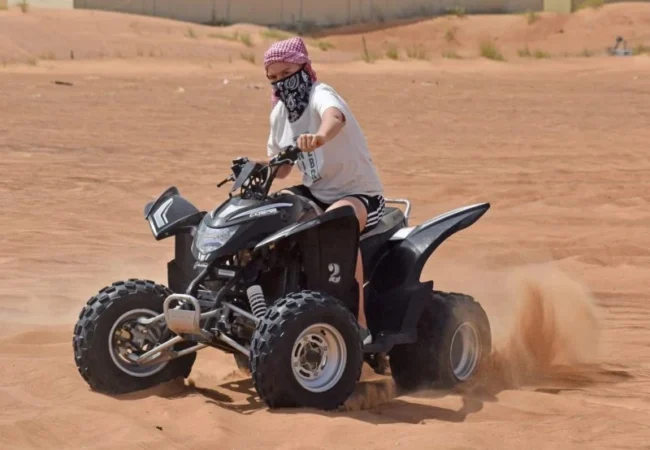 AED 200
The gentlest adult machine at the site, and the one guides steer first-timers toward once they see the dune field for themselves.
Book this quad AED 250
Parked closest to the briefing area because it is where most bookings end up. Enough torque to climb the first ridge without drama.
Book this quad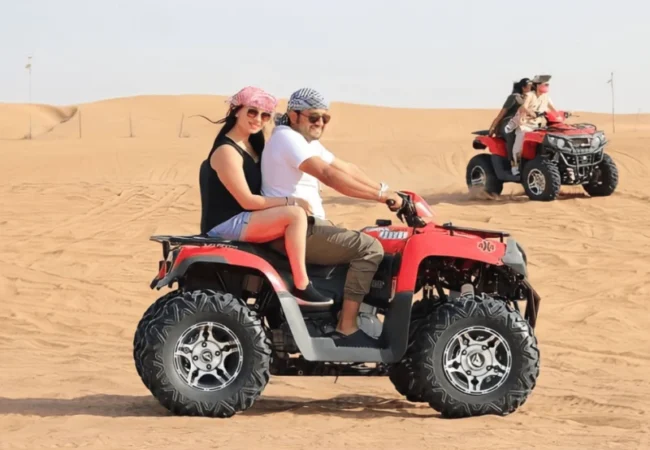 AED 350
One seat behind the other on the same frame, for a pair sharing a machine instead of splitting into two separate bookings.
Book this quadAED 350The machine most people already know from a first visit, with a noticeably stronger top end once the throttle opens on a bowl.
Book this quad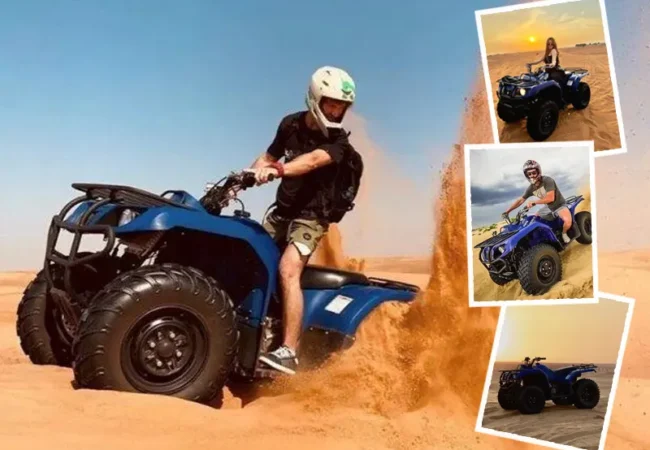 AED 450
The heavier utility frame in the lineup, better suited to the longer routes that push further out from the staging ground.
Book this quad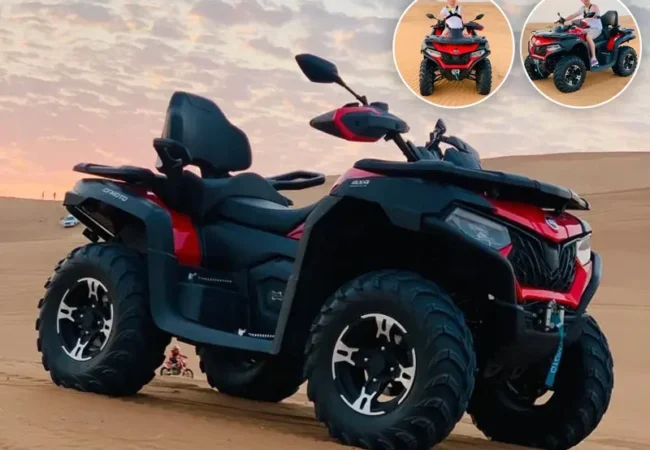 AED 700
Set apart from the utility machines, lighter and sharper for riders who want to feel the dune rather than just cross it.
Book this quad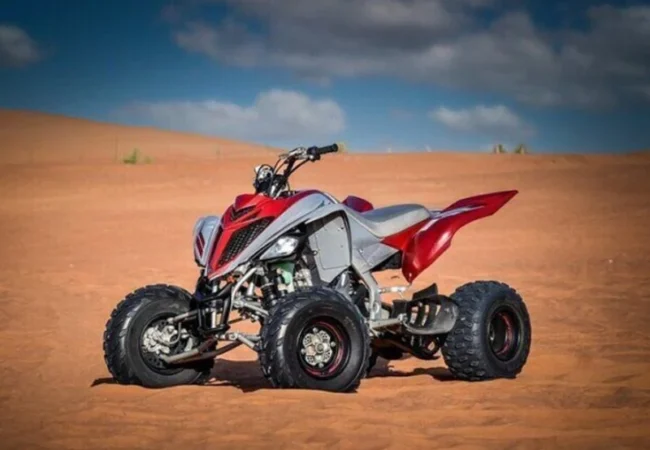 AED 795
The only machine here that starts with a quick chat about your riding history, then gets pointed toward the far side of the dune field.
Book this quadA quad session pairs here with a Land Cruiser run across the dunes and the BBQ camp afterward, all without leaving the Al Lahbab base, so an evening booked this way never means driving somewhere else partway through.
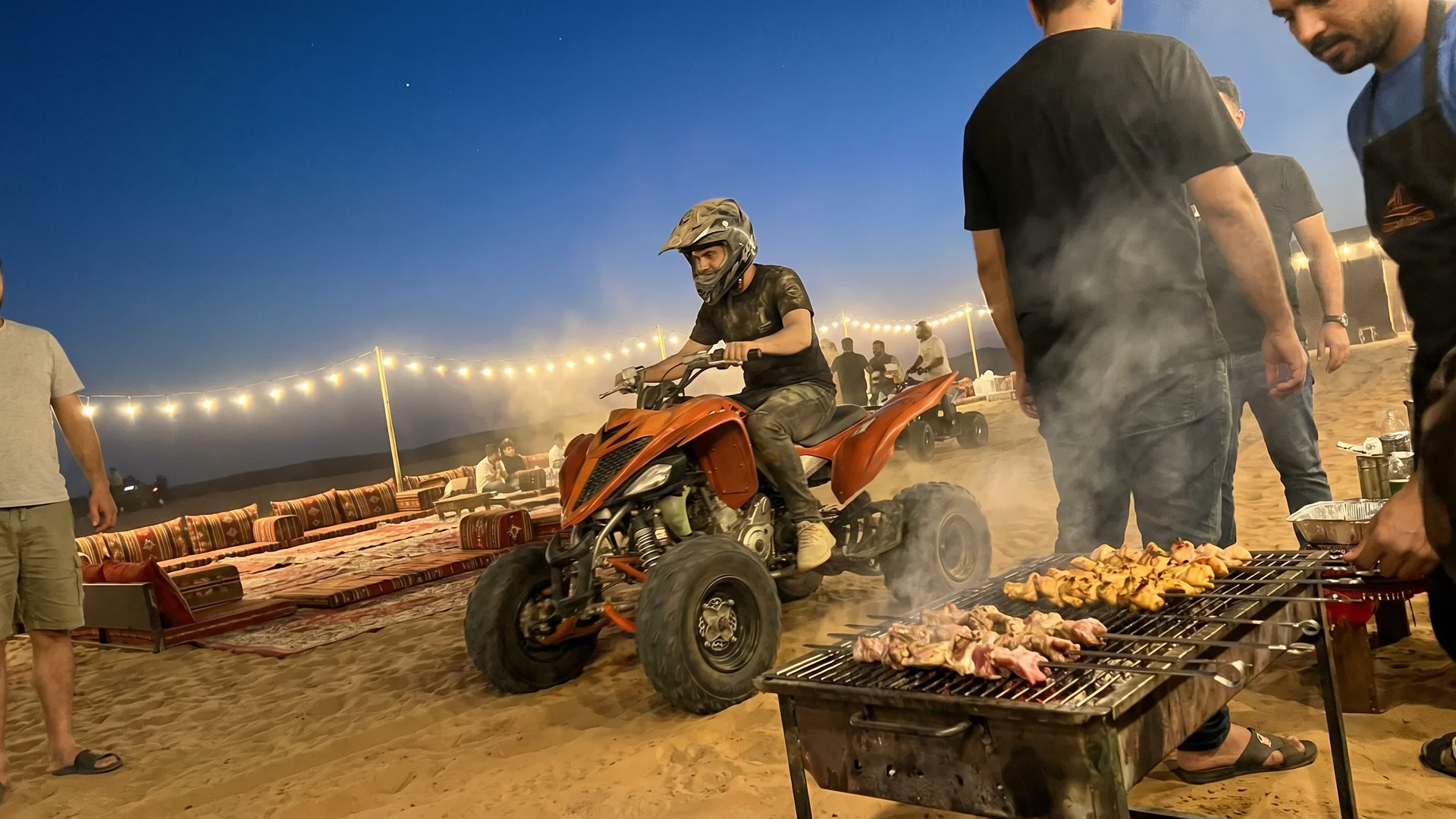 AED 375
Dune bashing before sunset, your own quad session, then dinner at the camp a short drive from the staging ground. The most-booked evening on this page.
Book this combo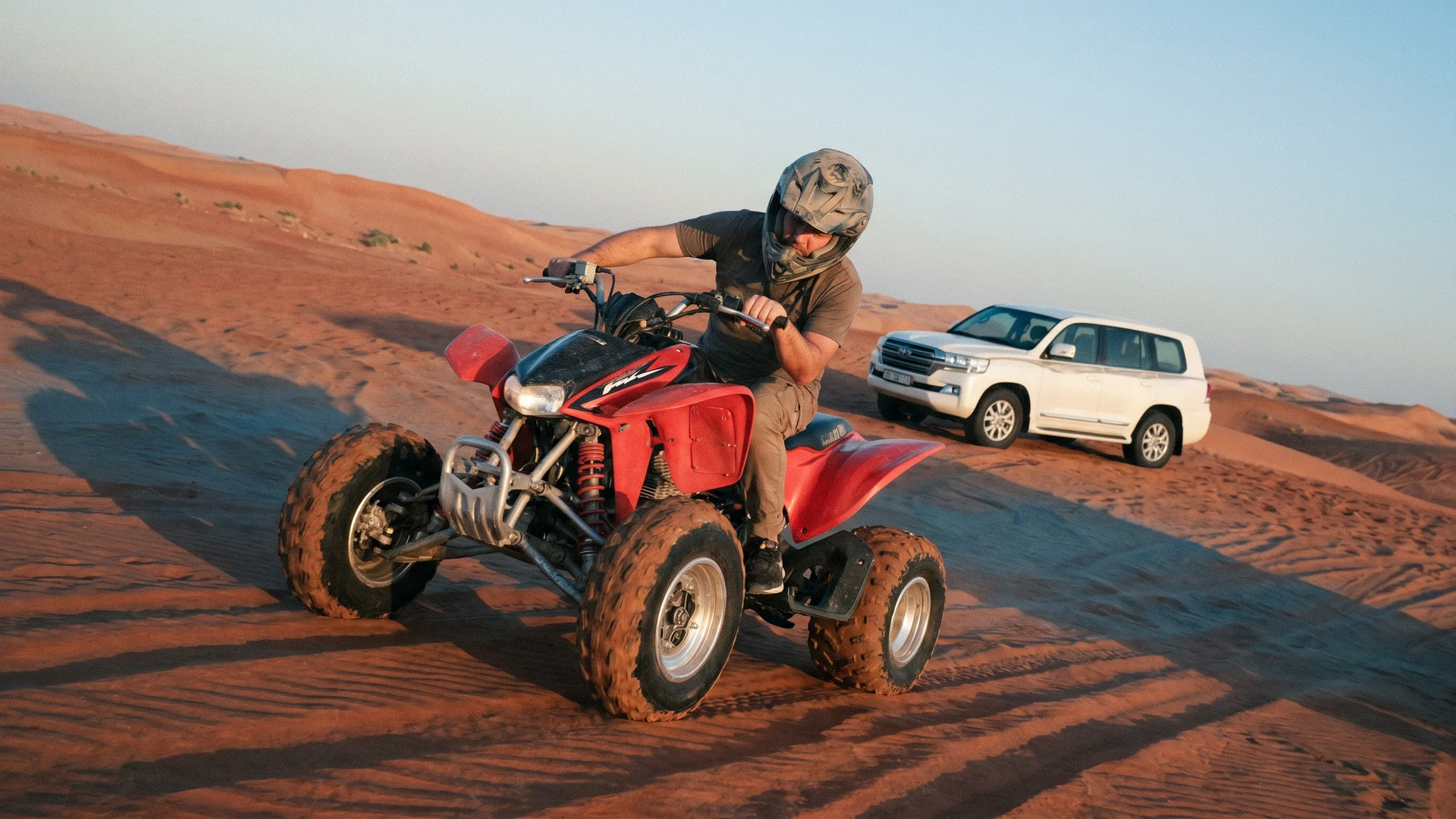 AED 290
Cooler sand, a quieter dune field, and the loop finished before the heat sets in. Popular with anyone stacking a second activity later that day.
Book this combo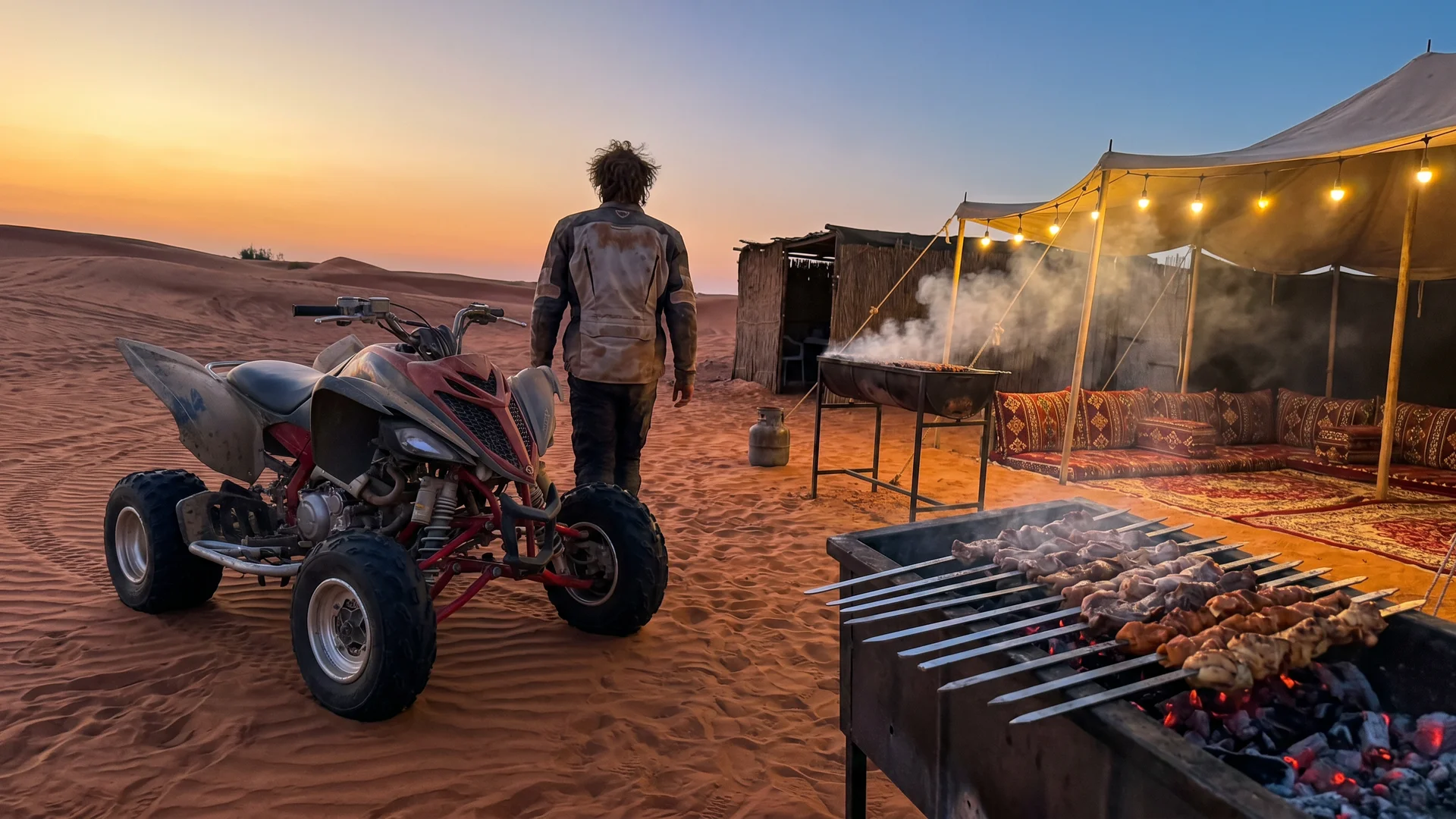 AED 700–1,300
Ride first, no 4x4 leg, straight on to dinner at the same camp. The price range tracks the machine, not the food.
Book this combo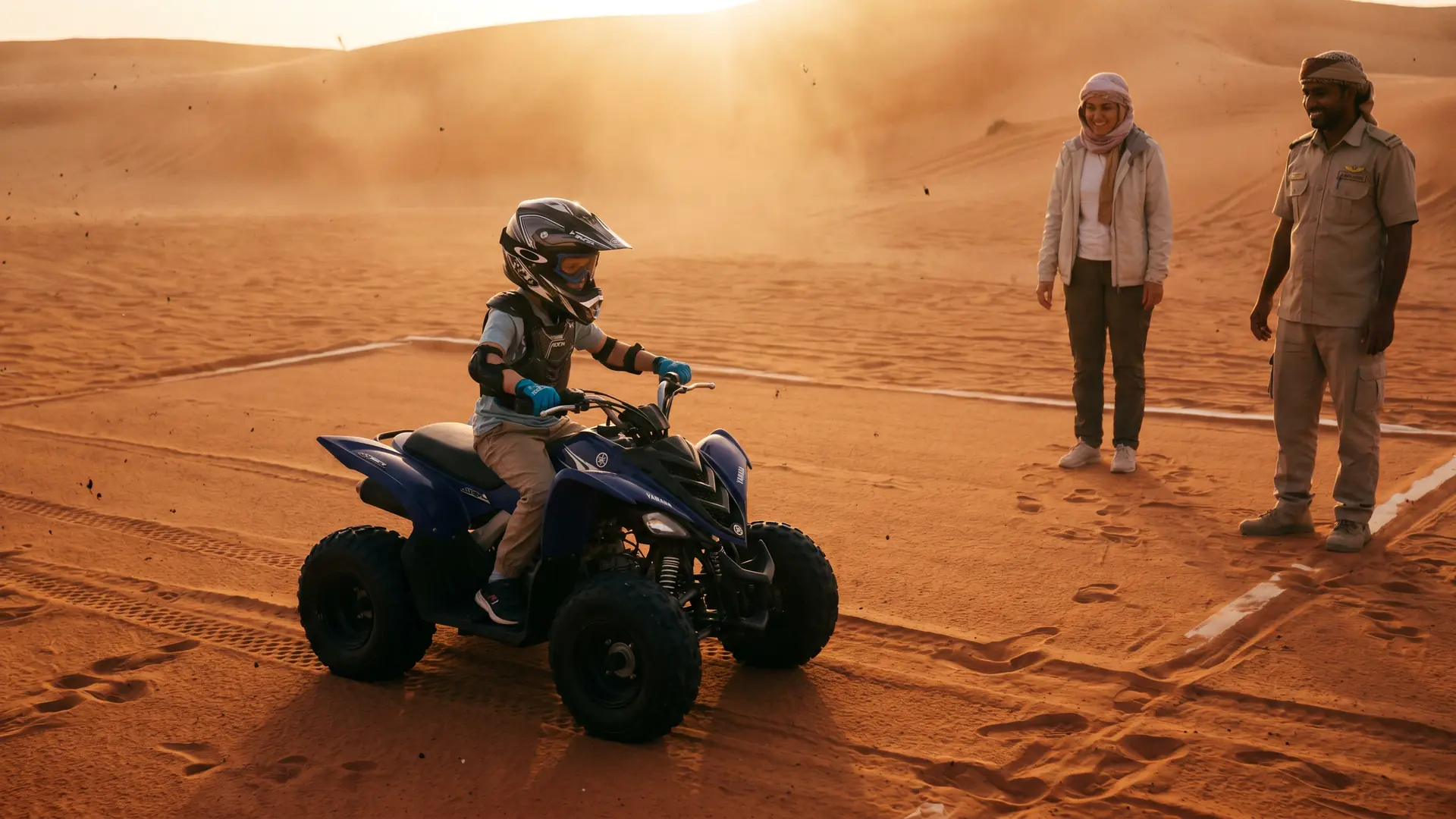 AED 150
Kids on the supervised 90cc loop, adults out on the main dune field, everyone back at the same staging point inside the hour.
Book a family sessionNot a car, and not a bicycle. Think motorbike, jet ski, or anything else where a hand or thumb sets the speed rather than your feet.
Most groups that pull into the staging ground are not all on the same machine, and that is the normal case rather than the exception.
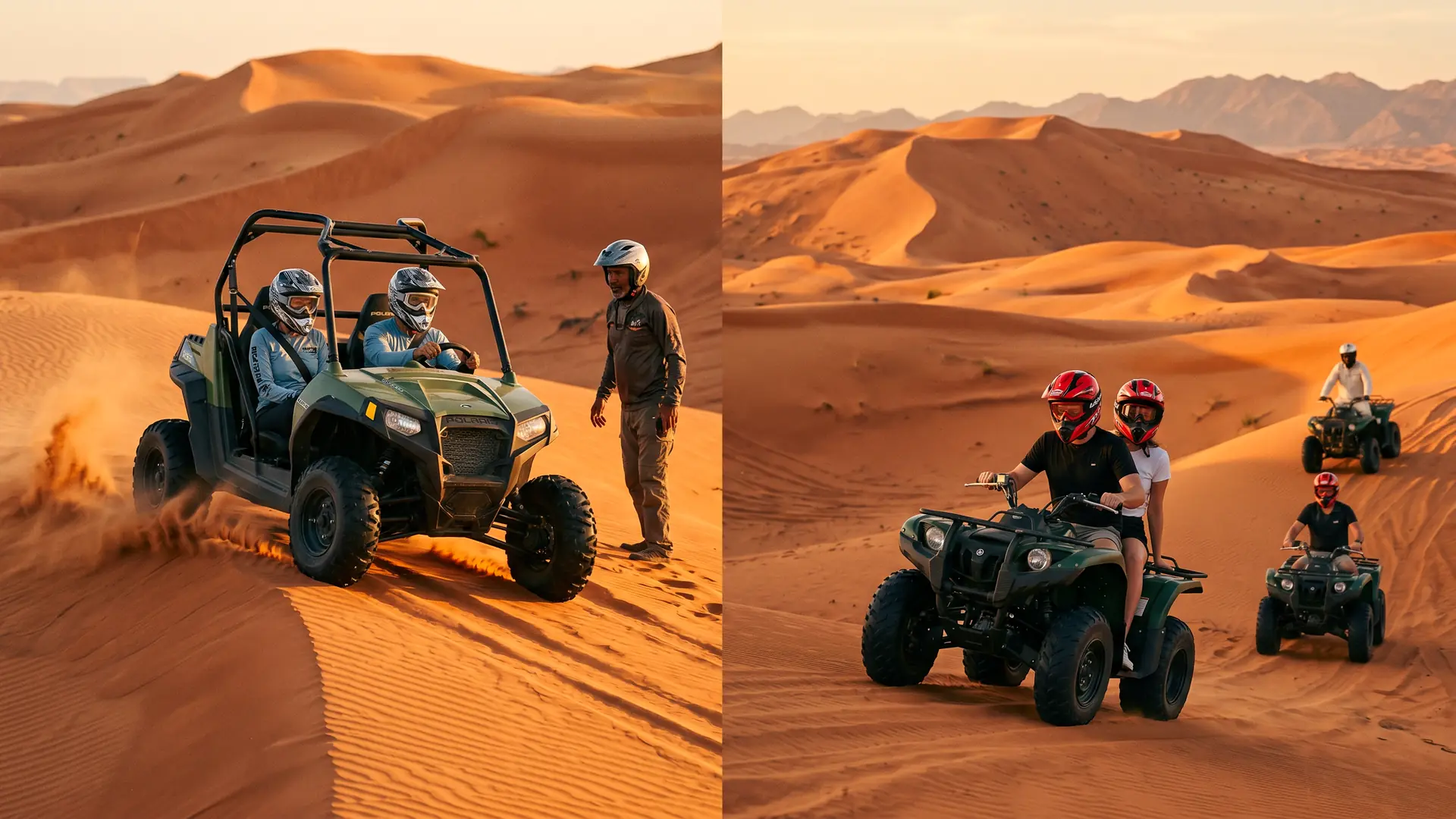
The buggies share the exact site as the quads, just with a cage, harness and steering wheel instead of handlebars. Plenty of groups book one of each on the same visit.
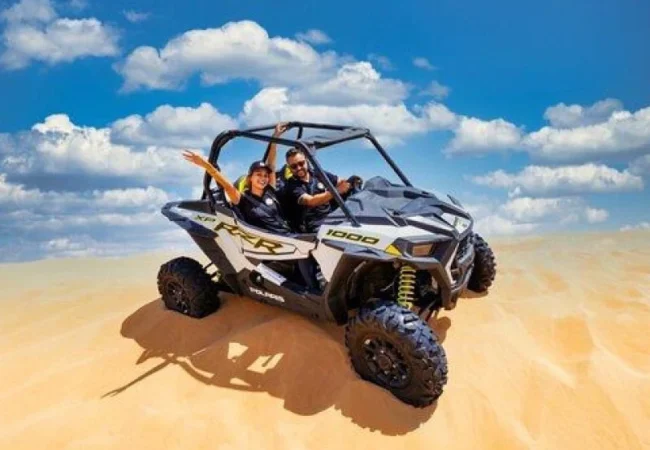
The easiest buggy on site to read, forgiving if your line is not quite right on the first pass.
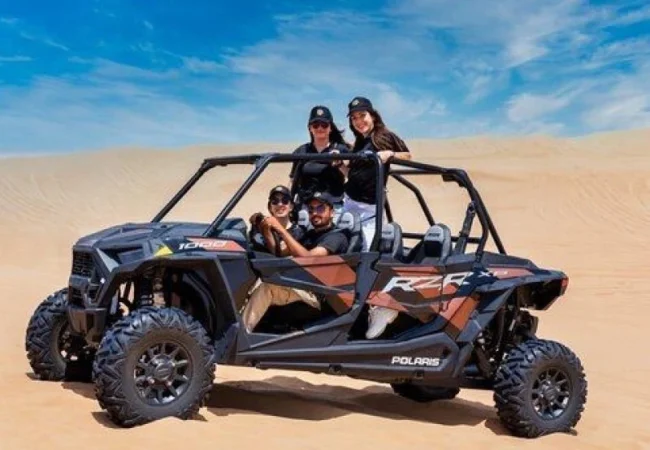
One driver, three passengers, one booking, and the lowest per-head cost of any way to get a group out onto the dunes.
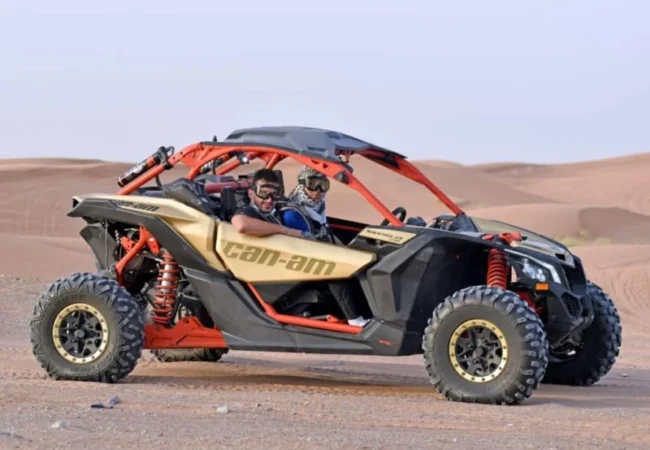
Wider stance and longer travel than the RZR, noticeably calmer once the ground gets rougher.
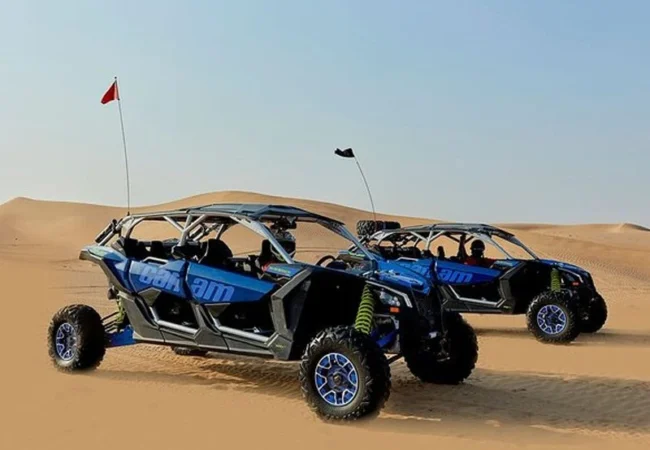
200hp on the same stretch of red sand as everything else here, and the fastest of the four-seaters to clear a ridge line.
The same Al Lahbab site on two wheels instead of four, which is exactly why there is a short screening call before anyone is handed the keys.
Land Cruiser safaris depart from that same Al Lahbab base, priced from AED 225, for anyone in the group happier letting a guide read the dunes instead.
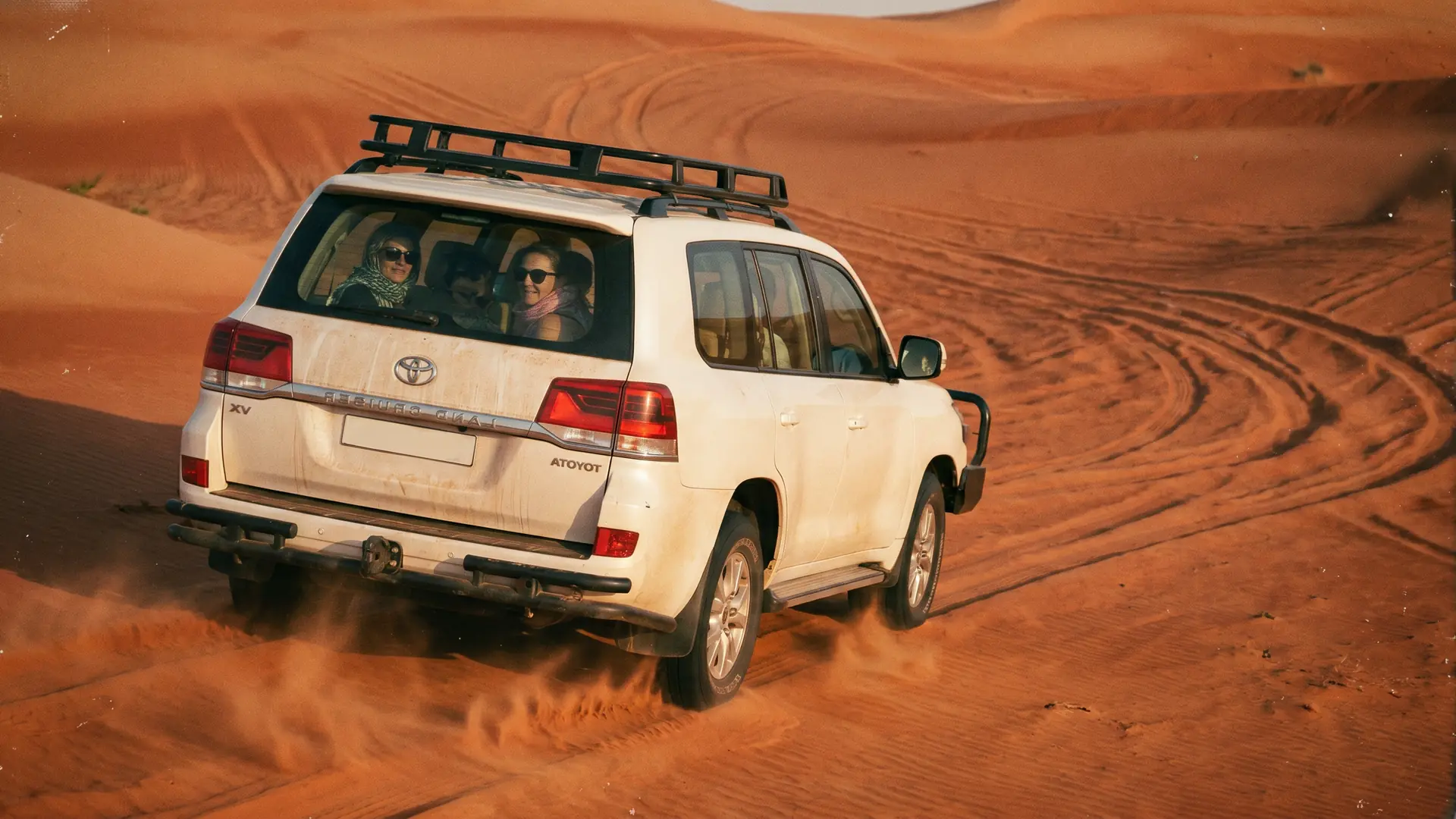
Early pickup while the dune field is still cool, with the whole outing wrapped up well ahead of lunch.
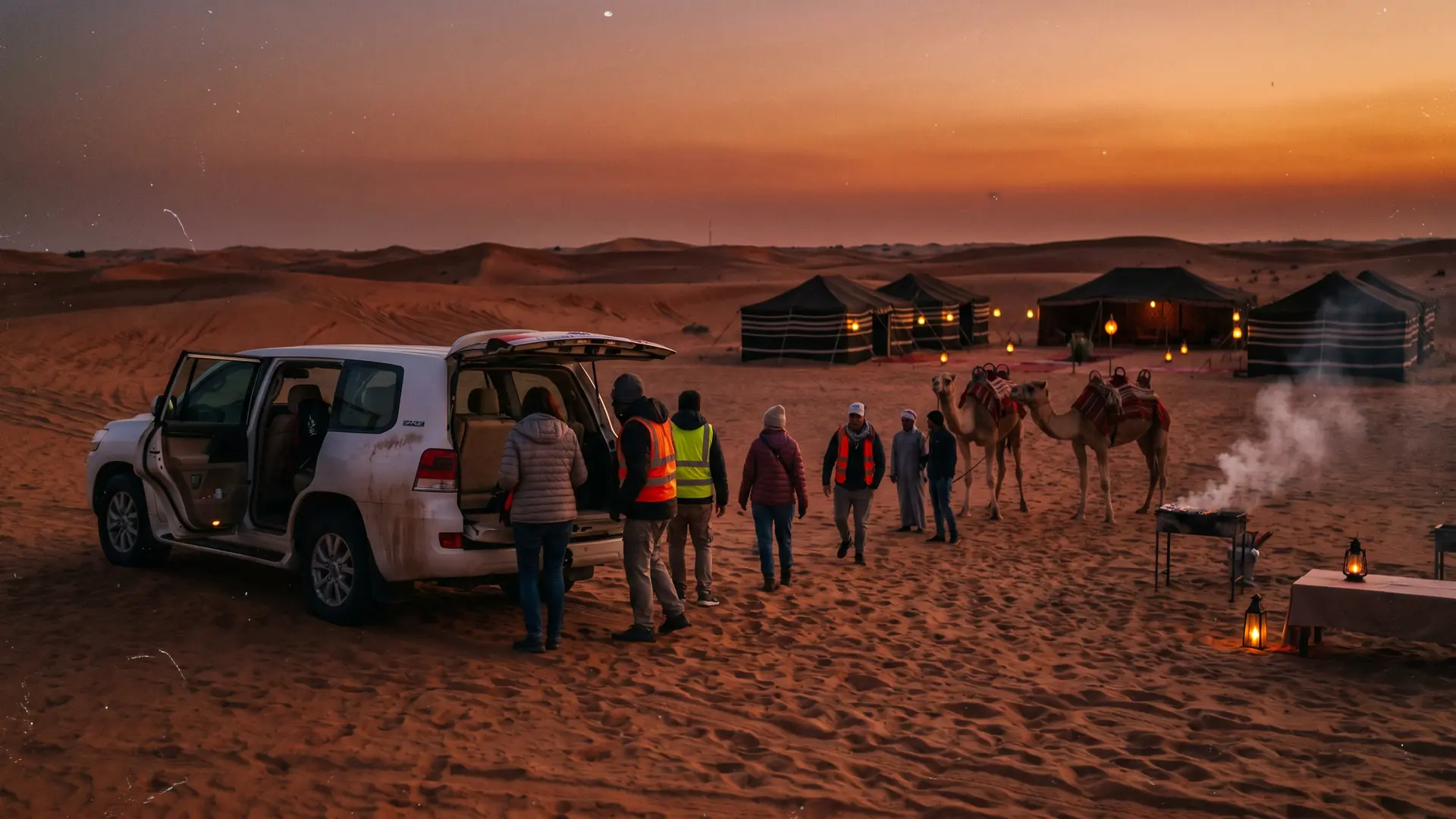
Sunset dune bashing, then dinner at the camp a few minutes from the staging ground.
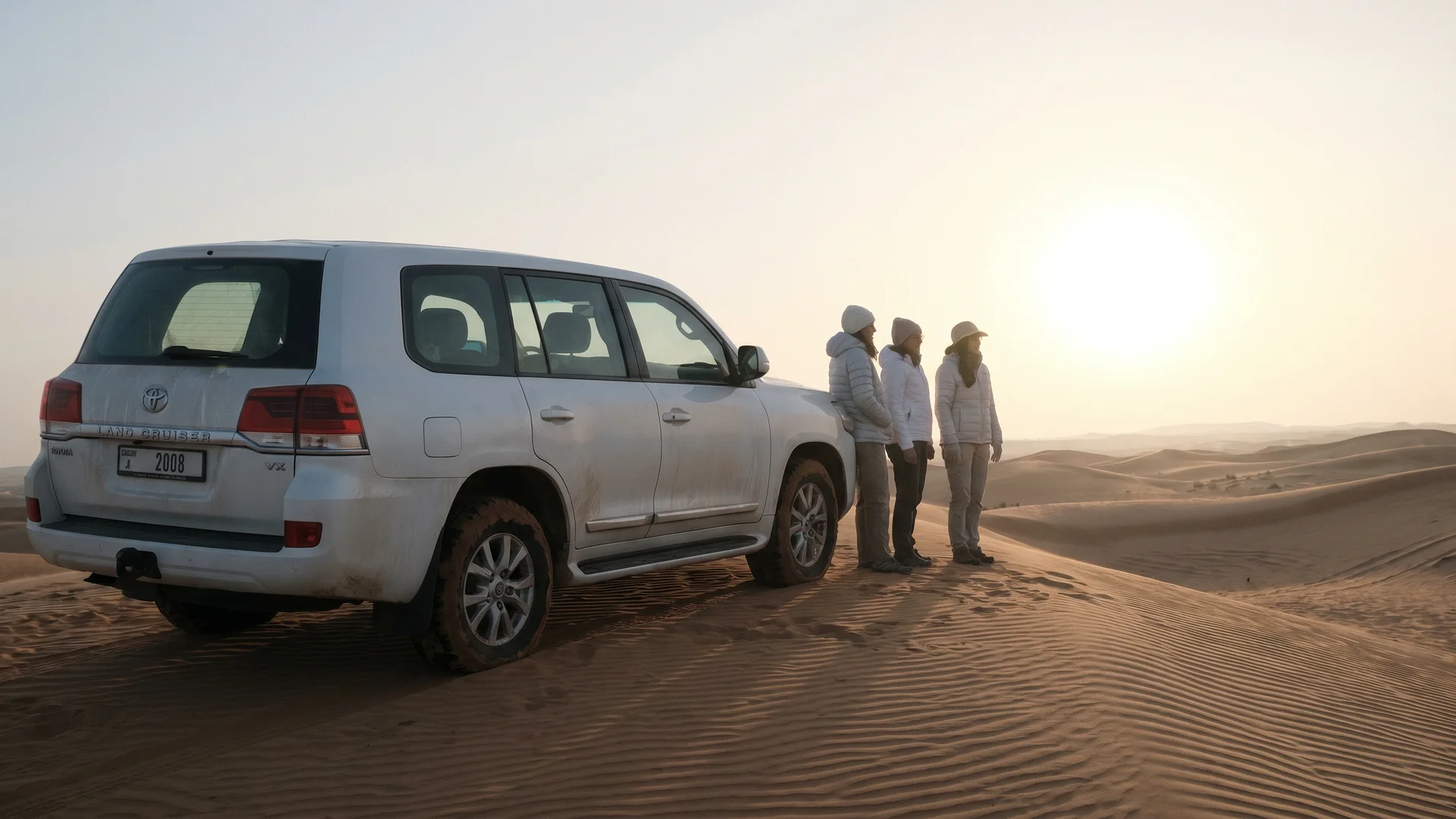
Your own vehicle and guide on the same route, without waiting on other cars to fill up first.
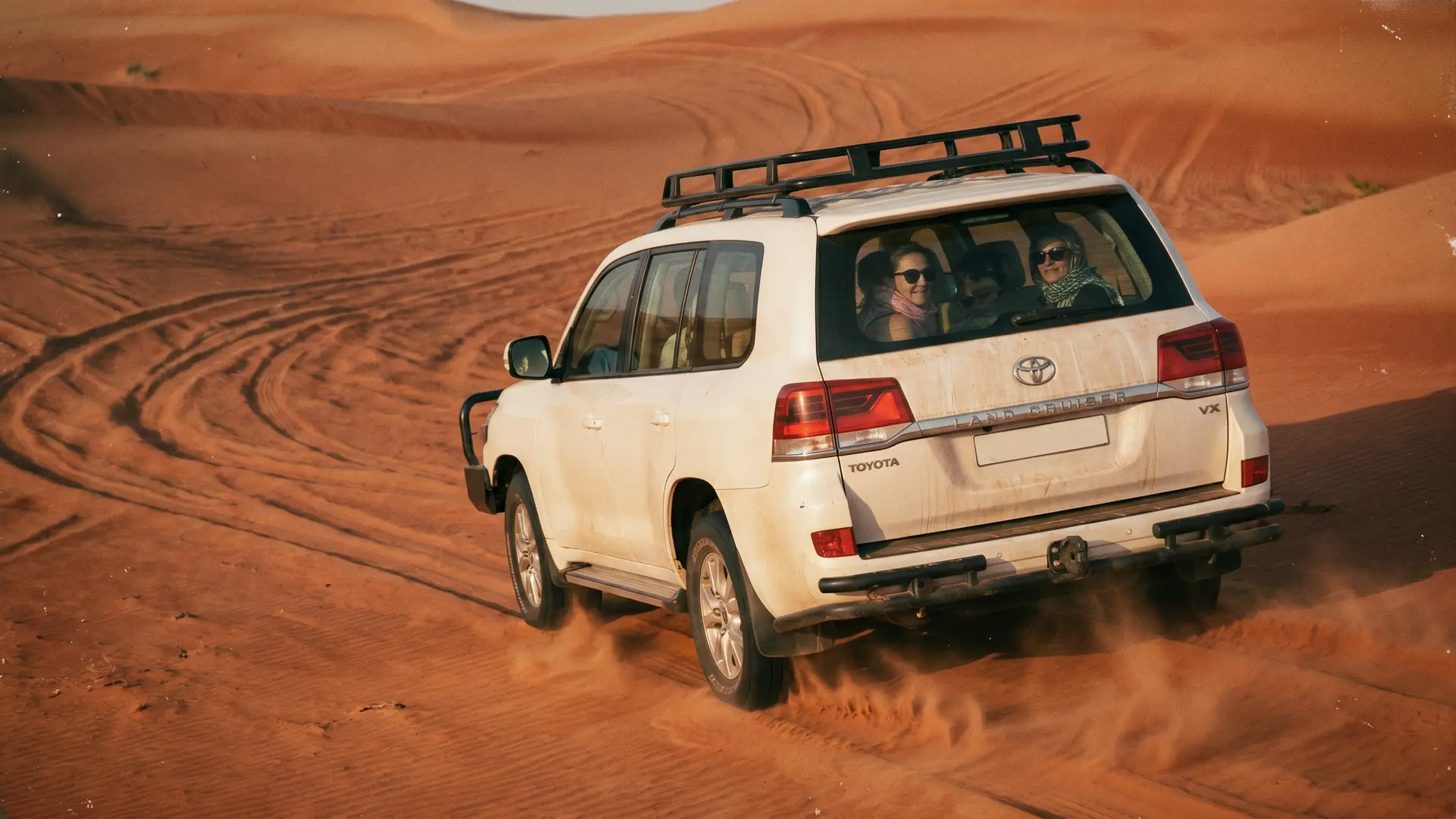
A private route through the dunes timed for sunset, with dinner waiting at the camp afterward.
Overnight stays, a calmer no-dune-bashing route, and corporate or family groups sized to your numbers are all arranged directly on WhatsApp rather than listed here.
The flights launch from a separate site west of the main dune field, timed for first light, weather allowing, across a season that runs roughly from September through May.
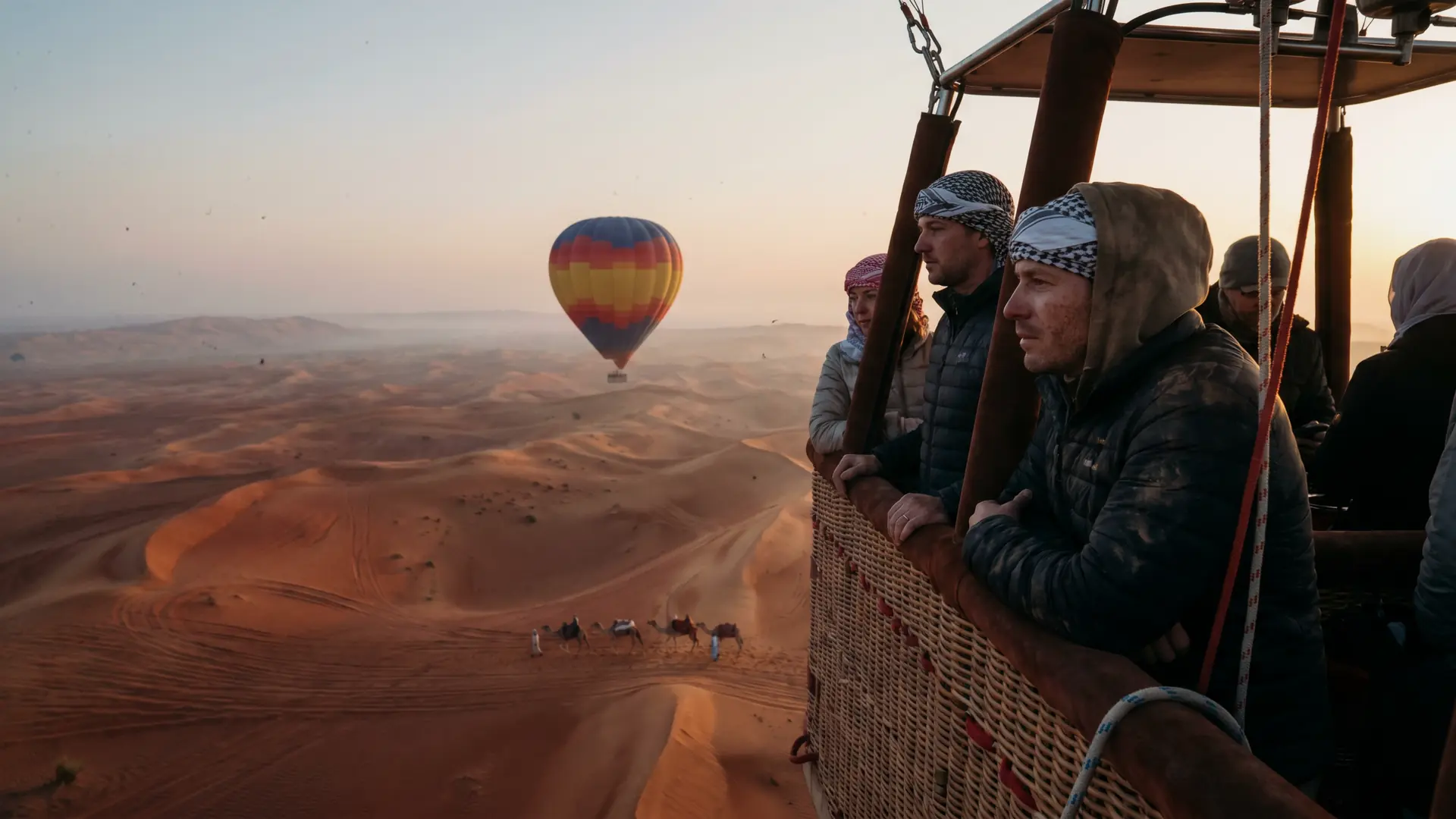
The standard flight is AED 1,049, stepping up to AED 1,149 with falconry added, or AED 1,349 with a full breakfast built in.
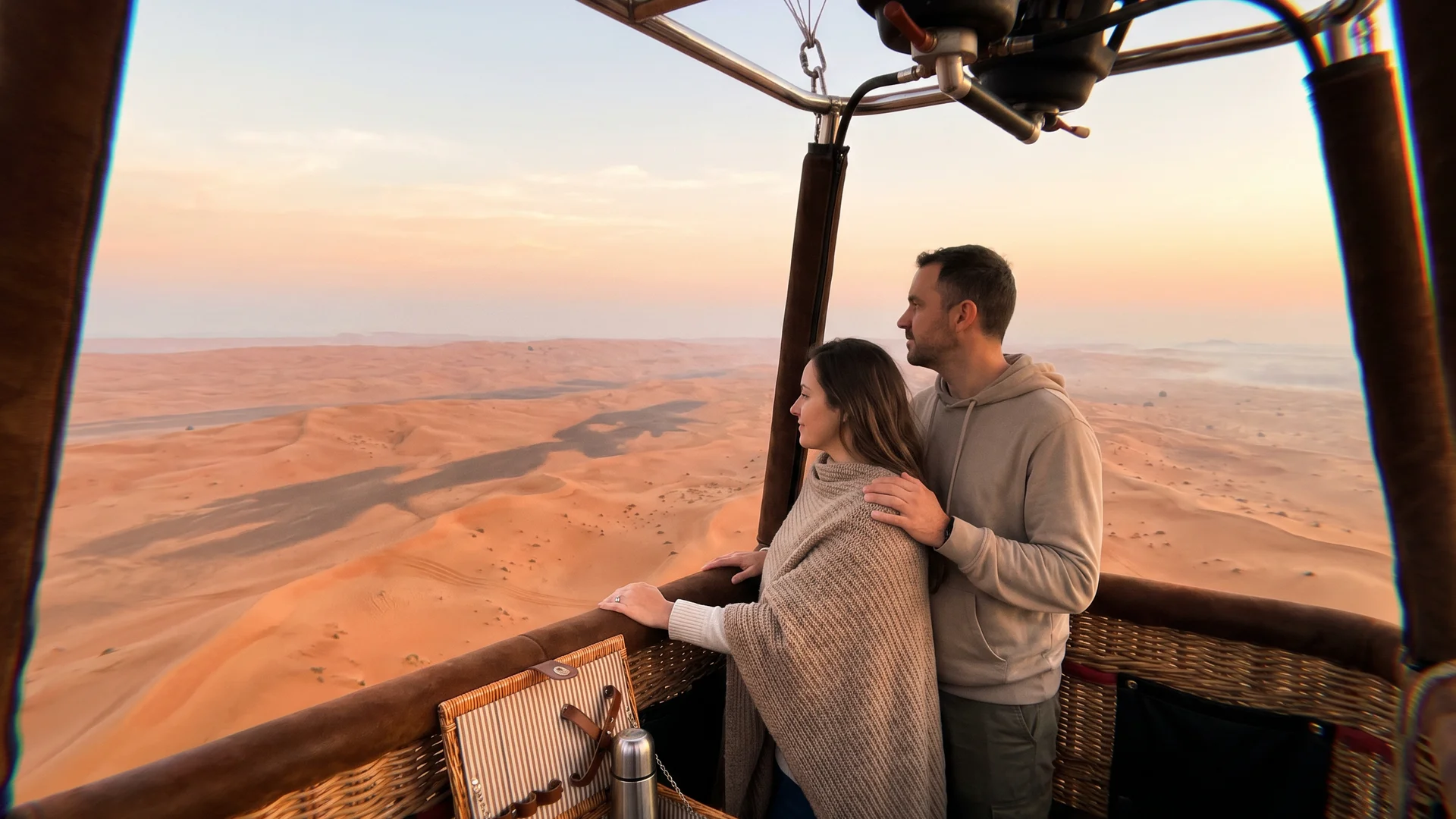
The whole basket to yourselves, booked most often for proposals and anniversaries rather than a first flight.
For anyone in the group who eyed the fleet and decided to stay closer to the ground instead, whether that means the same red sand or a stretch of beach in the city.
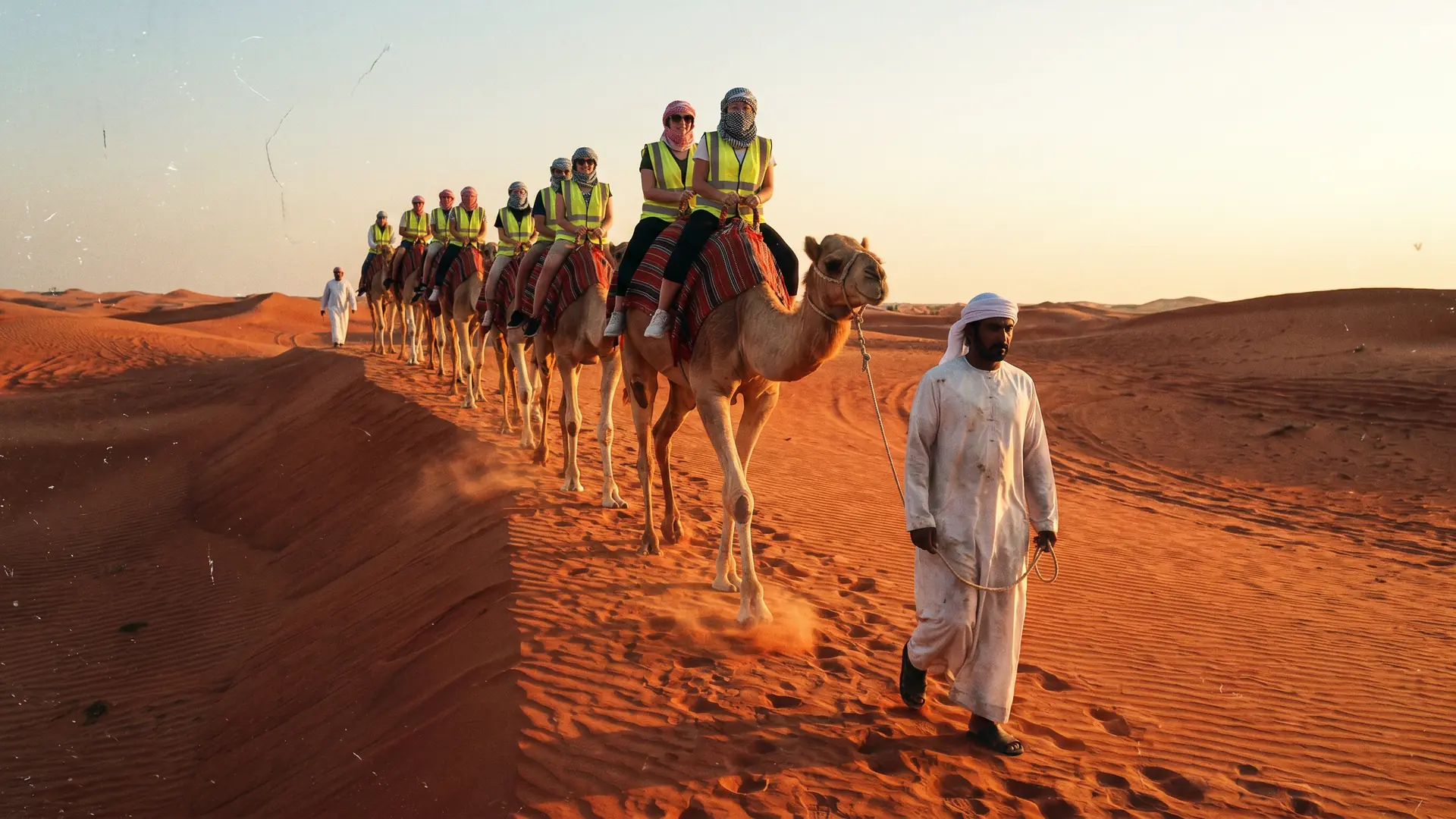
A guided walk across the same dune field, paced for riders from age three with an adult alongside.
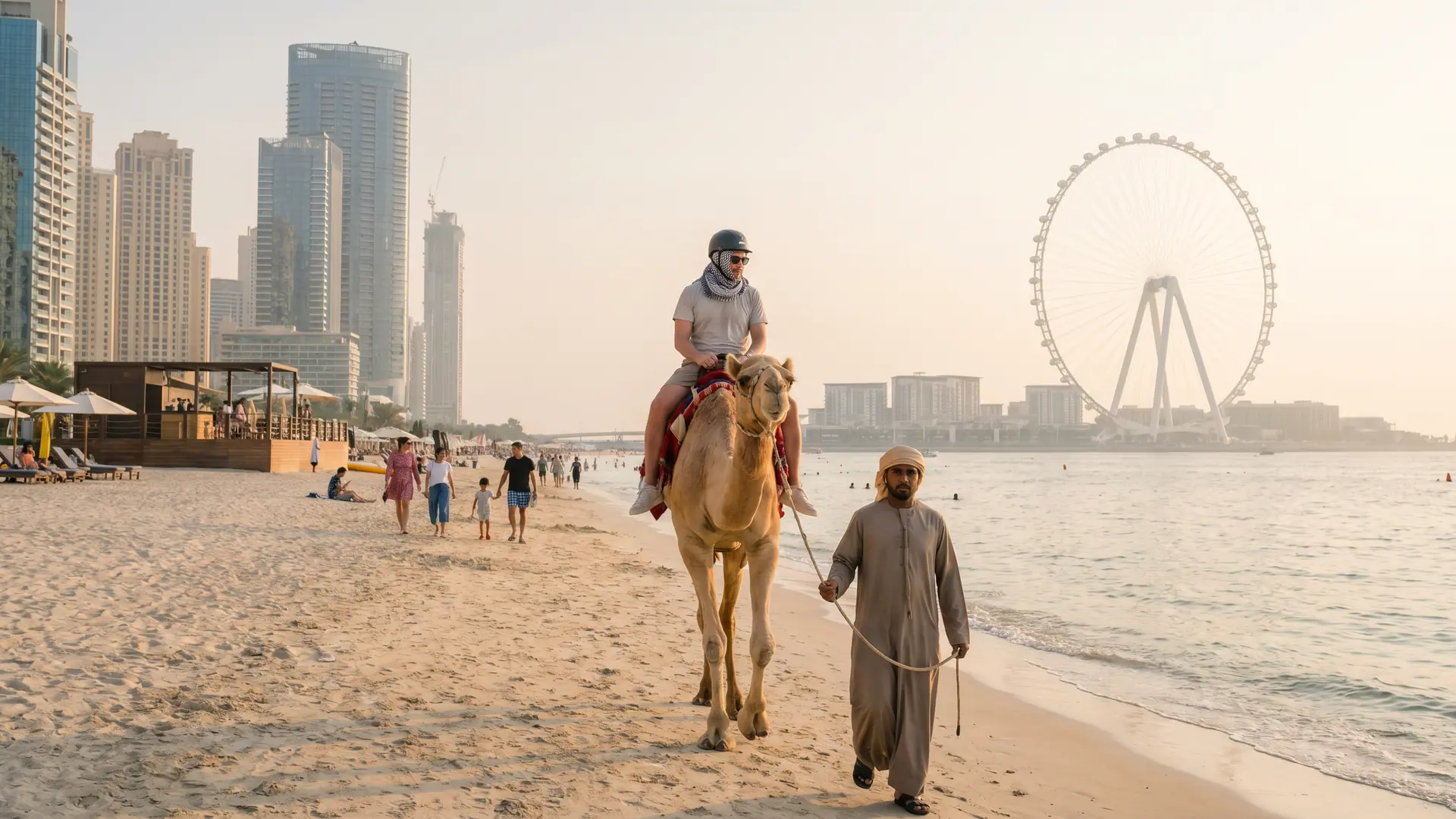
A city option instead of the desert trip, walking the sand at JBR while the skyline sits behind you.
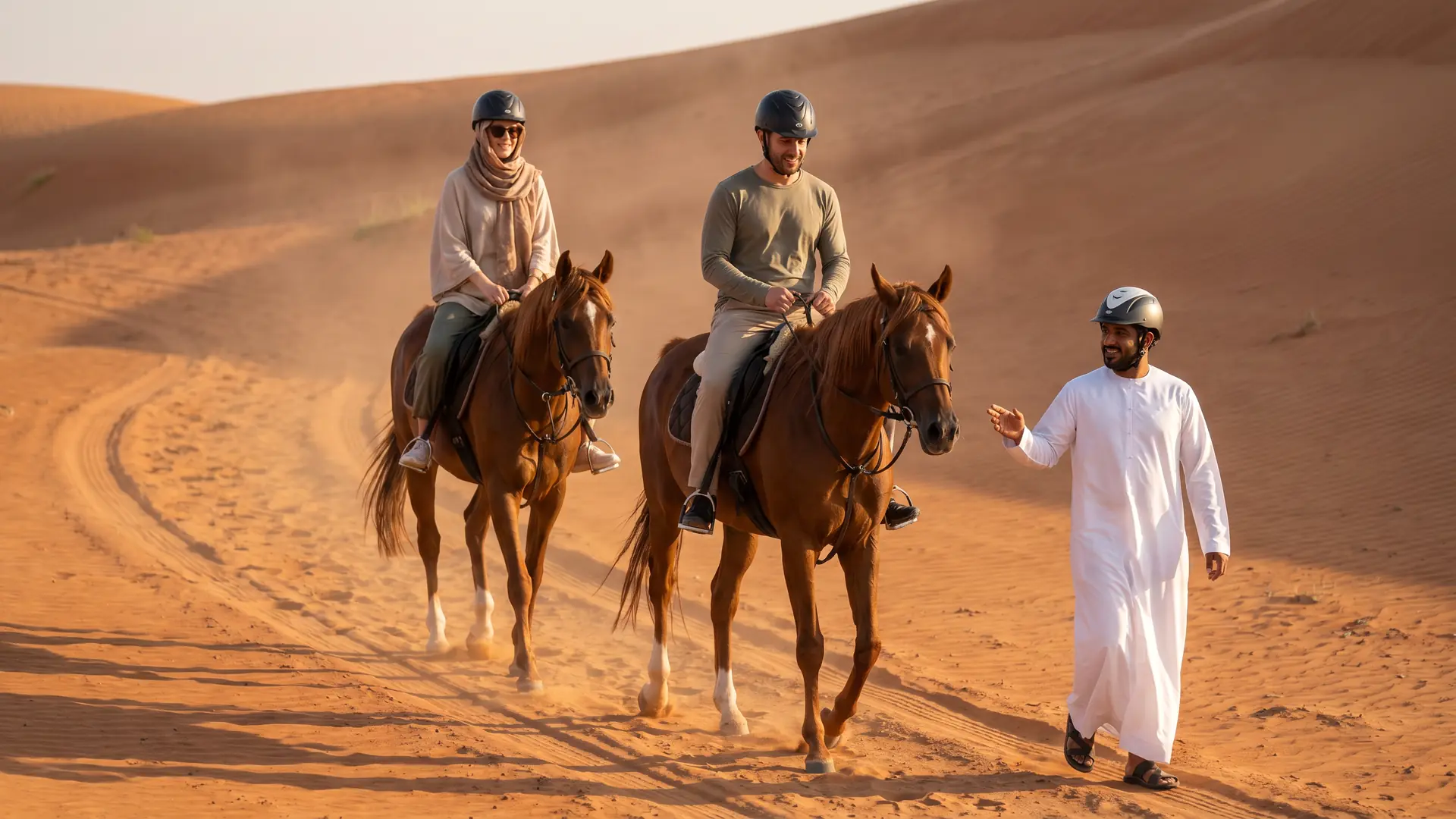
Suited to guests who already know their way around a saddle, less so a total beginner's first ride.
Two or three activities stacked into one visit to the same site, quoted rather than listed here because group size and machine choice move the final number.
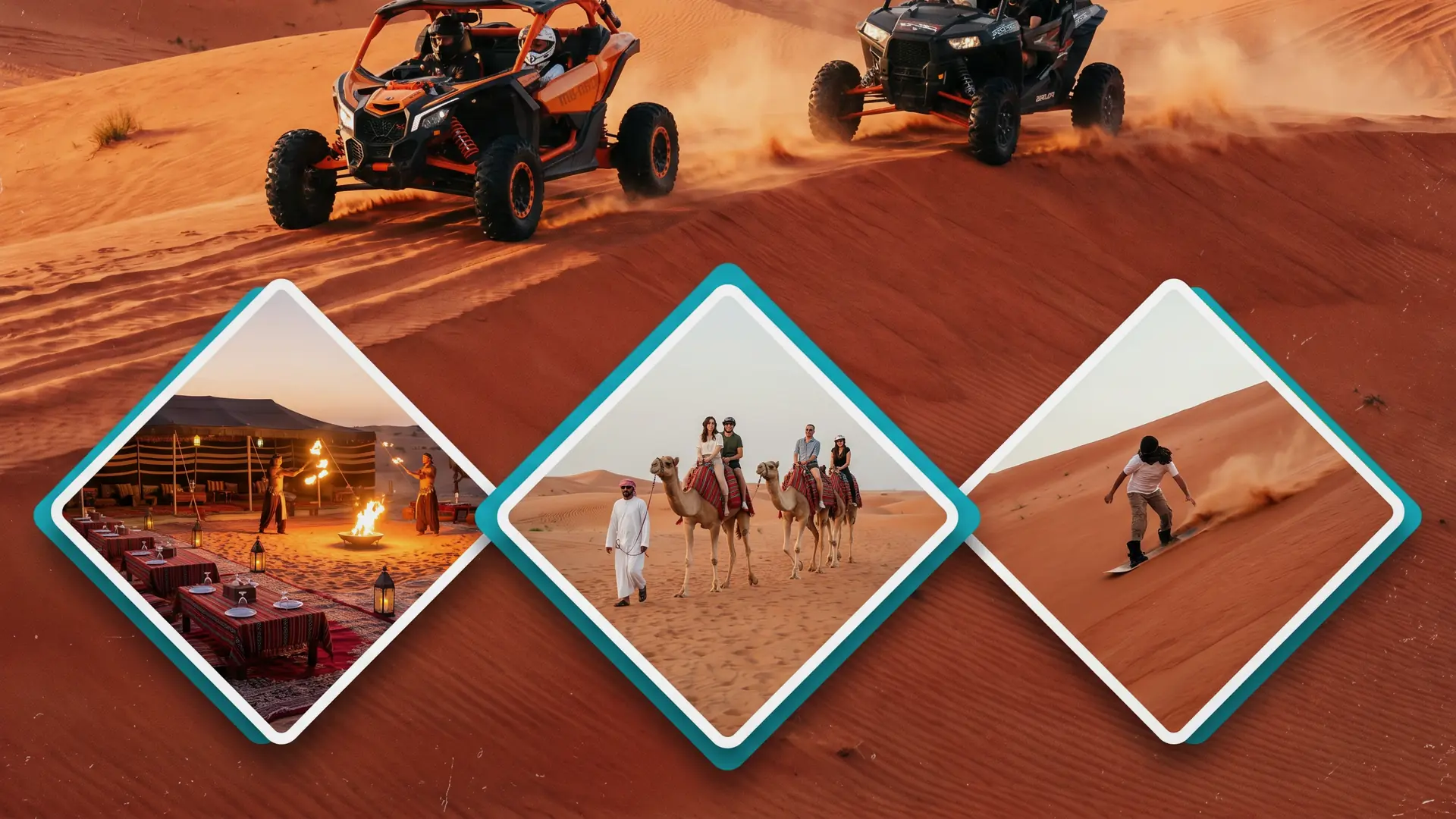
Quad while everyone is still fresh, buggy once the legs are tired. The final figure usually falls between AED 290 and AED 1,100, machine choice being what moves it.
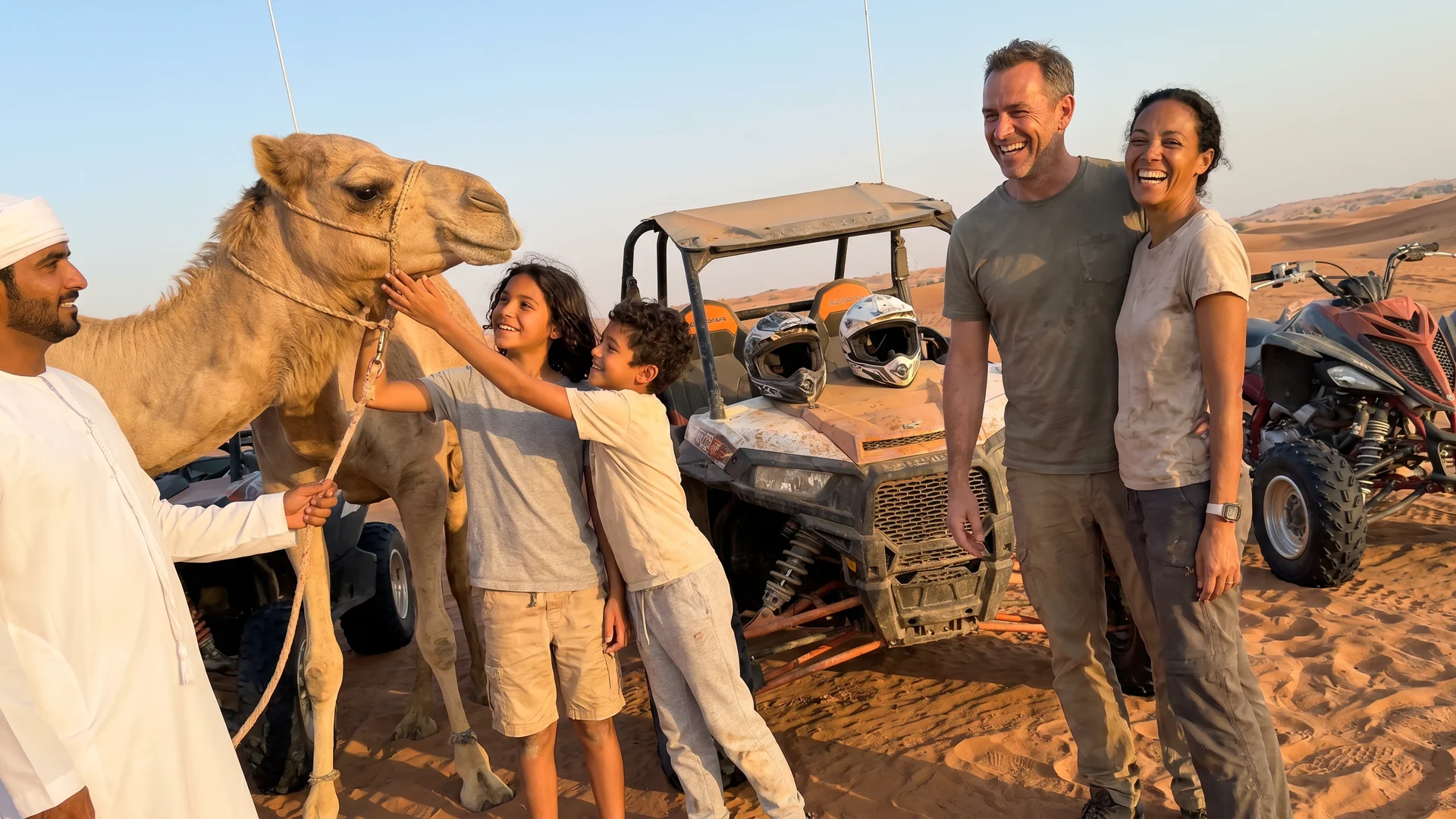
One group, three vehicle types between them, so quad, buggy and camel all get covered for whatever age is riding.
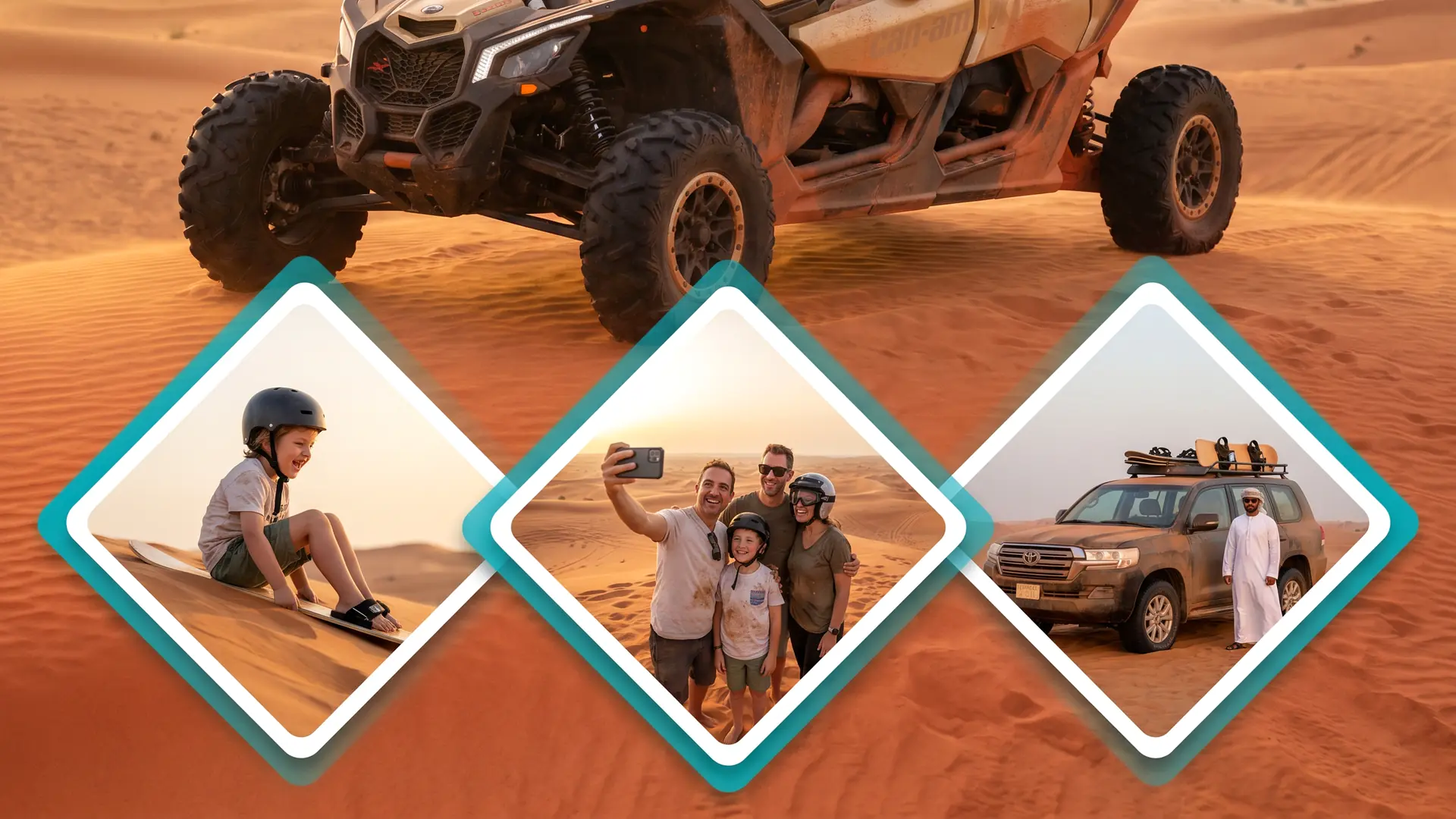
Quad, buggy, safari and the BBQ camp in a single visit. Usually lands between AED 700 and AED 2,200.
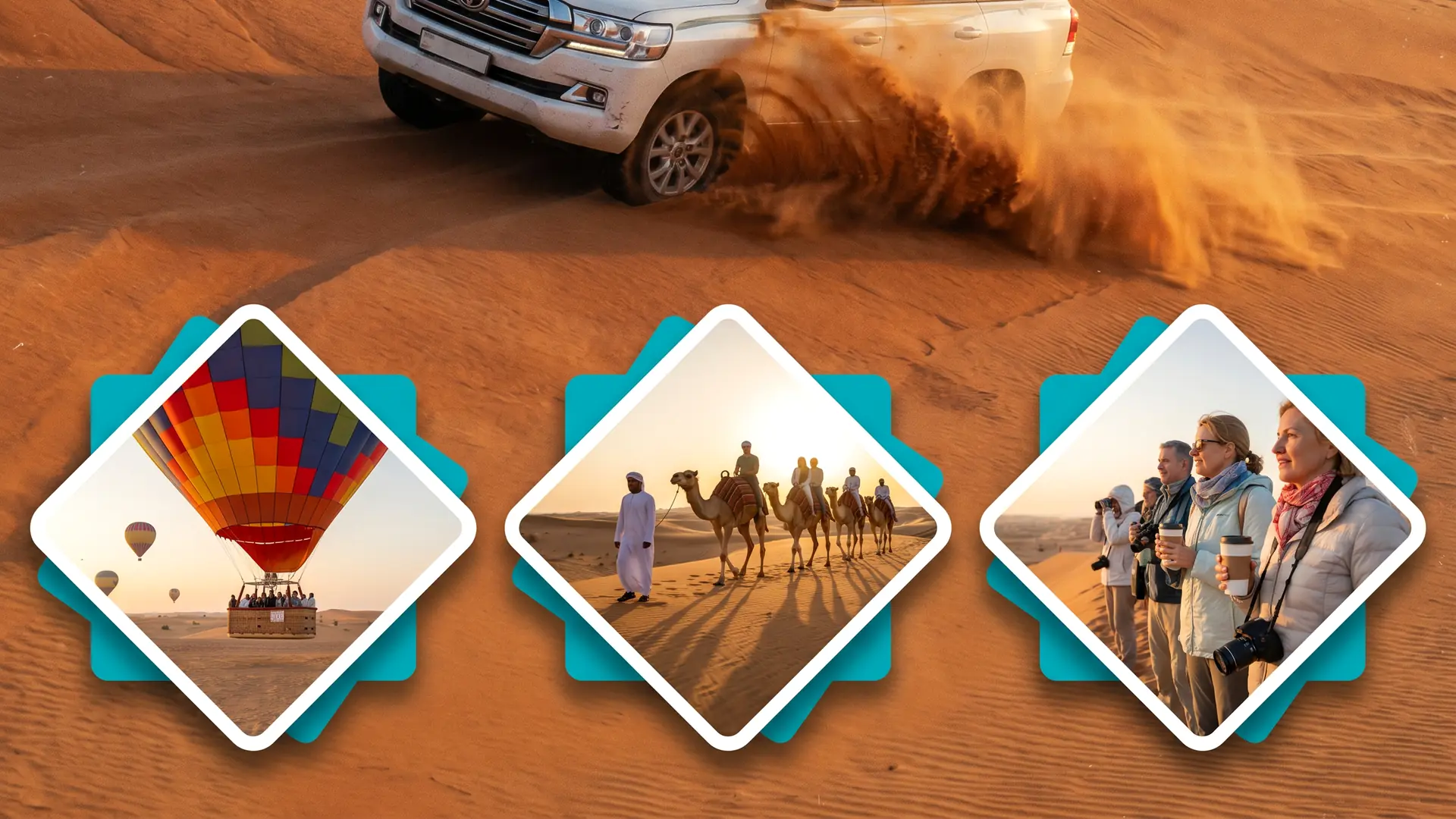
Sunrise flight first, then over to Al Lahbab once the light is up. A long day people rarely regret booking.
Every quad, buggy and dirt bike session on this page happens in one place: Al Lahbab, reached inland and to the southeast along the Dubai–Al Ain road. That sets it apart from the paler, more compressed sand nearer the main highway that shows up in a lot of generic safari photography. Here the dunes rise into genuine bowls rather than low ridges, and the sand keeps the deep red colour the area takes its name from.
There is a flat staging area at the base of the dune field where every session starts, whichever machine or package is on your booking. A guide reads how confidently you handle the machine right there before picking your route, and that single moment is essentially the whole safety approach in practice.
Six steps cover every booking, from the shortest slot to a full afternoon at the staging ground. It is the middle one that stretches or shrinks.
Collection from a central Dubai hotel, or the Al Lahbab pin sent to you if you are driving yourself.
Helmet fitted first, then a walkthrough of the controls, how to sit, and the hand signals the guide uses for slow down or stop.
A lap of the flat staging ground first, giving the guide a look at your handling before the dunes actually start.
Out past the staging area and into the bowls, following the lead guide's line along the ridges.
Back at the staging ground for water, a breather, and a look through the ride photos.
Straight on to the Bedouin-style camp for anyone booked on a BBQ package.
The 90cc keeps its own supervised loop for riders between nine and twelve, a guardian present throughout. Children younger than that still take part, either on a camel from age three or seated in a buggy where an adult does the driving. Mention anything uncertain about your group on WhatsApp ahead of the visit, not on arrival at the briefing. As the DTCM-licensed operator here, Dream Land Adventure Tourism leaves route and pace decisions in the sand entirely to the guide.
Based on 1,183 Google reviews
Based on 726 reviews
Pricing spreads across eight machines: AED 200 buys the least expensive adult ride, the Yamaha 220cc, while AED 795 sits at the very top for the Raptor 700cc. In between, more bookings land on the 400cc than any other single machine, at AED 250. A dedicated 90cc track takes riders aged nine to twelve for AED 150, supervised the whole way through, and every number quoted is per rider besides the AED 350 double seat.
Licensing simply is not part of the picture at Al Lahbab, since the land sits in private hands rather than under public road rules. A guide instead confirms something more useful during the warm-up: your actual ability to control the machine, checked before anything steep begins.
Nine is the minimum, and only for the separate supervised 90cc loop, with a guardian on hand throughout. Below that age, a camel ride starting from age three, or a spot in a buggy beside an adult driver, keeps them part of the same visit.
Just the Yamaha 400cc double, which actually has a proper two-up seat, priced at one combined AED 350 fee. Nothing else on site takes a passenger, so plan on booking separately rather than trying to share a single-rider machine.
Everything runs at Al Lahbab, reached off the Dubai-Al Ain road inland from the city. The sand there sits deeper red and less compressed than the ground closer to the highway where most tourist photography gets shot.
No, that comes as an add-on confirmed before payment rather than baked into the base rate. Regular pickup zones include Marina, JBR, Downtown, Business Bay and Deira. If you would rather self-drive, directions reach you by WhatsApp once your booking is confirmed.
Go with the quad when a machine of your own outweighs the extra effort of steering through body weight. Go with the buggy when a roll cage, harness and genuine steering wheel appeal more. No shortage of groups book both and split the visit evenly.
Closed shoes are the only hard rule, alongside sunglasses and clothes that can handle getting full of sand. Helmets come with the booking. Wrapping a scarf or buff across your face pays off more than most people expect going in, and packing dry clothes for the trip back keeps you from riding home covered in sand.
A guide simply rides back and gets you moving again, treated as an ordinary part of the session rather than anything gone wrong. Most of the time it traces back to letting off the throttle midway up a soft dune face. No extra charge follows it.
Yes, on the condition that you start on the 220cc and stay honest during the briefing. A flat stretch of ground comes first, giving a guide the chance to judge your handling before anything else gets decided, and a softer line gets assigned quietly to anyone who needs one, with no announcement made to the rest of the group.
The base price covers a single session on the main dune loop. Anything longer, or a full multi-activity day, gets arranged specifically for your group, and a combo that layers in a safari and dinner easily fills most of an evening. Share your group size and preferred timing for a precise schedule.
Yes, and it happens more often than not. Adding BBQ and a quad to the evening safari pushes the combined price to AED 375, which draws more bookings than any other pairing on this page. Book the same combination in the morning instead and it settles at AED 290. Drop the 4x4 portion and pay for quad plus dinner alone, and the cost falls somewhere across AED 700–1,300, set by whichever machine gets picked.
Strong wind or a sandstorm shifts a session onto a new time slot rather than cancelling it outright, with notice given ahead of time and a replacement slot offered at no extra charge. Balloon flights sit far more exposed to weather than anything running on wheels.
Midweek, a few days ahead is usually plenty. Weekends need more runway, a week or beyond, and longer still if the plan involves the Raptor 700cc or several machines booked as a set. Secure online advance payment confirms your booking, support available 24/7.
Quad biking here happens at one specific site: Al Lahbab, a stretch of red dune roughly 45 minutes southeast of Downtown Dubai, off the Dubai–Al Ain road. It is not the same patch of desert used in most Dubai safari marketing photos, which tends to be shot on flatter, more compressed sand closer to the highway, sometimes at a separate dune called Big Red. The location does not shift with the package, only the loop taken from the same staging ground changes: kids ride a governed 90cc for AED 150, while adults choose from six further tiers, topping out with the Raptor 700cc at AED 795.
Booking here is not limited to quads. The same operator runs dune buggies alongside them from AED 599, keeps a KTM dirt bike fleet for riders with prior two-wheel time from AED 850, sends Land Cruisers out on desert safaris from AED 225, lifts a hot air balloon at sunrise when conditions allow from AED 1,049, and offers foot-paced camel treks across that same stretch of sand priced from AED 150.
The Evening Desert Safari with Quad Bike and BBQ at AED 375 is the most-booked package on this page, and it stays at the same Al Lahbab site from pickup through to dinner rather than moving between locations partway through the evening. Secure online advance payment confirms your booking, support available 24/7.
About 45 minutes out via the Dubai–Al Ain road, inland from the city and apart from the sand nearer the highway.
~45 min outA Land Cruiser dune run, a quad session of your own, then a Bedouin-style BBQ camp, all without changing location.
AED 375Parked closest to the briefing area because it is where most riders on this site end up.
AED 250Its own marked track off to the side of the main dune field, ages nine to twelve.
AED 150Handed over at the staging ground after a short screening conversation with a guide.
AED 795Same staging ground, same dune field, a roll cage and harness instead of open handlebars.
AED 599Launches from a separate site west of the main dune field, timed for first light.
AED 1,049A slower loop across the same red sand, paced for riders from age three.
AED 150Al Lahbab sits close to 45 minutes southeast of Downtown Dubai, and nearer 50 to 60 minutes from the Marina or JBR, since both of those routes cross the city first before reaching the Dubai–Al Ain road out to the site.
Downtown Dubai works as the simplest reference point because it sits close to the middle of the city, with a fairly direct run out to Al Lahbab along the Dubai–Al Ain road. Outside of heavy traffic that drive comes in close to 45 minutes, heading southeast and inland, away from the coast in a line straight enough that the route rarely doubles back on itself the way a coastal pickup sometimes does.
The Marina and JBR add real time to that figure, not because Al Lahbab sits any farther out depending on which hotel you start from, but because both are on the coast and have to cross a meaningful stretch of the city before reaching the same road a Downtown pickup joins almost immediately. Depending on the hour, that usually adds five to fifteen minutes on top of the Downtown number, more if you are leaving during the evening crawl out of the Marina.
The route itself changes character a few times along the way. The first stretch runs past towers and interchanges most visitors already recognize from getting to their hotel, density drops through outer residential and industrial districts next, and the road finally opens out with nothing built on either side. That last section is usually where people put their phones down and start actually looking out the window.
None of this changes where the session happens, only how long it takes to arrive, which is why pickup windows are built around specific hotel zones instead of one flat number for all of central Dubai. If part of your group is Downtown and part is at the Marina, do not assume a shared departure time suits both. Confirm your own pickup slot on WhatsApp rather than syncing off someone else's.
Not usually the exact same spot. A lot of Dubai desert marketing is shot on the paler, more compressed sand nearer the highway, sometimes at Big Red specifically, while Al Lahbab is a separate stretch that runs a noticeably deeper red.
Most first-time visitors picture “the Dubai desert” as a single backdrop, since that is how it usually gets presented online: one generic stretch of orange sand standing in for the whole activity, regardless of which operator or which specific dune field a given photo actually came from. In practice, the desert ringing Dubai covers a lot of different ground, and not all of it looks or rides the same.
Big Red is the name most people have actually heard before arriving, and it refers to a specific, heavily used dune closer to the main road, popular partly because it is easy to reach and easy to photograph a short walk from the car park. Al Lahbab is a different stretch further out, with less passing traffic and sand that runs a deeper, more saturated red than the flatter ground nearer the highway.
A fair amount of Dubai desert marketing gets shot at or near the more accessible spots simply because they are convenient: closer for a photographer, easier for a quick pass-through shoot, less driving for whoever is producing the content. That does not make those photos fake, it just means the backdrop in a lot of generic Dubai desert marketing is not necessarily the same dune field a specific operator actually rides on, a point the where we ride section above covers from the operational side.
Guests who arrive at Al Lahbab having already seen typical Dubai desert photography sometimes mention that the colour reads stronger than they expected, or that the dunes build up more steeply than flatter shots had implied. That is a real difference in terrain, not a filter or a lucky hour of the day, and it is the main reason this page keeps naming the specific site rather than leaving it at “the desert.”
Al Awir sits closer to the city and leans toward agricultural land and camel tracks rather than open dune. Margham and Fossil Rock, further out, lean toward rock-crawling and technical off-roading communities. Al Lahbab lands in between: genuine red dune, close enough for a same-day trip from central Dubai.
Dubai's surrounding desert is not one continuous, interchangeable stretch of sand. Different pockets around the city have ended up serving different purposes over time, shaped by how close they sit to the built-up area, what the terrain actually does underfoot, and who has historically used the land. Choosing a site for guided quad and buggy sessions means weighing all three, not just finding the nearest patch of open ground on a map.
Al Awir sits nearer to the city than Al Lahbab, which sounds like an advantage until you look at what the land is mostly used for. A meaningful share of it is agricultural or given over to camel tracks and stables, and the open sections that remain tend to be flatter, less suited to the bowl-and-ridge riding a quad session is actually built around.
Margham and Fossil Rock sit in the opposite direction, further from central Dubai and closer to terrain that draws serious off-road and rock-crawling communities rather than a first-time visitor on a supervised loop. The rock formations and harder-packed sections that make those areas interesting to experienced 4x4 drivers are not what a guided session on a governed 90cc or a first adult machine actually needs underneath it.
Al Lahbab lands in the middle of those tradeoffs: far enough out to reach genuine, undeveloped red dune rather than land already under other use, close enough that a round trip from central Dubai fits inside a single afternoon or evening, and established enough as a riding site that the staging ground, guide routes and recovery process are already built around it rather than improvised on the day.
No. Quads, buggies and KTM sessions all launch from the same Al Lahbab staging ground, and the desert safari packages run from there too. The one exception is the hot air balloon, which lifts off from a separate site chosen for open ground and wind rather than proximity to the dune field.
Every quad class on this page, from the supervised 90cc through the Raptor 700cc, launches from the same staging ground at Al Lahbab. What changes between machines is the specific loop a guide takes you on, not the site itself: a longer route for the Grizzly, a tighter one for a first-time rider on the 220cc, always starting and finishing at the same base.
Buggies and the KTM dirt bikes share that exact starting point. A group that splits between quads and a buggy in one visit is not being driven to two different locations, they are picking up two different vehicles from the same lot before heading out onto the dunes together or on separate routes, whichever the guide sets.
The desert safari packages, morning and evening, also run from Al Lahbab rather than a separate safari-only site, which is why combos pairing a quad with a safari and dinner do not involve a transfer partway through the evening. Everything from the first dune bash to the BBQ camp sits inside the same general area.
The genuine exception is the hot air balloon, launched from a separate site to the west chosen for open ground and wind conditions rather than closeness to the quad field. Camel rides also come in two distinct locations by design: the Al Lahbab desert route, and a separate ride along the sand at JBR beach in the city itself, a real choice between two settings rather than a variation on one.
A working desert base rather than a resort: machines lined up by class, a covered rest point with water, a stretch of flat sand for the warm-up, and guides handling the handover in front of you rather than at a reception desk.
Stepping out of the pickup vehicle, most people notice first how functional the base actually looks. It is not built to resemble a resort or a visitor centre, it is a working staging ground: packed sand at the edge of the dune field, with machines lined up in rows by class, closest to furthest as you walk from where the vehicles park.
Guides handle handovers right there instead of at a separate desk or office. Helmets get fitted, the controls briefing happens standing next to your actual machine, and the check before you are handed the keys is something you watch happen, not something completed out of sight before you arrived, part of the same handover the pickup-to-drop-off flow walks through step by step.
There is a covered rest point near the machines with water kept cold, useful both before a session and again once you are back from one. It is shade and a bench rather than a lounge, in keeping with the rest of the site: everything here is built around getting you onto a machine efficiently, not around how the waiting area photographs.
First-time visitors expecting something closer to a hotel or a branded activity centre sometimes need a moment to recalibrate. What is actually in front of you is closer to a well-run operational yard that happens to sit at the edge of a genuinely striking stretch of red dune, and most people say the second part outweighs the first within a few minutes of getting on a machine.
There is no direct public transport route to Al Lahbab. Almost everyone arrives by hotel pickup, self-drive, or a pre-arranged taxi that already knows the route, since the last stretch is not something a random metered taxi reliably navigates on request.
Dubai's metro and bus network covers a lot of the city well, but it stops well short of Al Lahbab. There is no rail line or scheduled bus route anywhere near the site, and that gap exists on purpose: this is privately controlled desert land, well outside the kind of public footfall that would justify a transit stop nearby.
For most visitors the practical answer is hotel pickup, offered as an add-on rather than assumed unnecessary. A driver collects you from a central Dubai hotel and handles the entire route, including the final stretch off the main road that is easy to miss without having driven it before.
Self-driving is the other realistic option, and it suits anyone comfortable navigating from a shared pin rather than a street address, since the last few kilometres are not always labelled clearly by standard GPS apps. Turn-by-turn details reach you once the booking is confirmed, timed so you are not searching for them mid-drive.
A regular metered taxi is technically possible but rarely the smoothest route. Many drivers are unfamiliar with the exact turnoff, and asking one to wait around for a multi-hour session is a harder sell than a scheduled pickup or your own car. Between pickup and self-drive, most groups find one of those two covers it without needing to improvise a third option.
Visually, yes. Cooler months tend to bring sharper definition and deeper colour in the dunes, especially early and late in the day, while the stronger overhead summer sun flattens the same terrain and mutes the red toward a hazier, paler tone.
Cooler months, roughly October through April, are when Al Lahbab most resembles the picture people carry in their heads beforehand: sharper shadows along the ridgelines, deeper and more saturated red in the sand, and enough clarity in the air that the dune field reads as genuinely dramatic rather than simply warm-toned. Morning sessions in this window often catch the richest light of the day.
Summer shifts the same terrain considerably. Higher sun angles flatten the shadows that give the dunes their shape in photos, heat haze softens the horizon by mid-morning, and the red tone itself reads paler and hazier under the harsher overhead light. The dunes have not physically changed, but the visual impression is noticeably less dramatic than the same view in January.
This has more to do with light angle and atmospheric haze than with heat itself changing the sand. A late-afternoon session in August can still produce strong colour as the sun drops toward the horizon, even if the middle of that same day would not.
It is part of why evening slots stay popular outside the cooler months too: lower sun, longer shadows, and a better chance at the deep colour the site is known for, whatever the season. If the visual side of the ride matters as much as the riding itself, timing a session for the edges of the day works better than aiming for the middle of it, winter or summer.
It is within Dubai's boundaries, just the inland desert portion rather than the coastal city everyone pictures. The Dubai-Al Ain road runs past it, and the address still reads Dubai, not a neighbouring emirate.
Both sit within a similar range, somewhere around 45 to 55 minutes depending on traffic through the city first. Airport pickups usually route through fewer junctions than a Marina start, so the timing evens out more than the map distance suggests.
No. Facing back toward the city there is a flat, paler band of scrub before the skyline. Facing the other way, the red dunes roll on with nothing built on them, which is usually the direction the cameras end up pointing.
Coverage is generally fine at the staging ground itself, patchier once you are deep in the bowls. It is not a dead zone, just not a guaranteed full-bar spot the way central Dubai is.
Yes, both use the same staging ground at Al Lahbab. What changes with the vehicle is the specific loop taken from there, not the starting point or the drive out.
Closer to Dubai. It sits southeast of the city, and while Abu Dhabi guests do book here, the drive from that direction runs noticeably longer than the 45 minutes quoted from Downtown Dubai.
Time of day accounts for most of it. Early morning and late afternoon light pulls more red and orange out of the same sand that looks flatter and more beige under the midday sun.
Yes, a covered rest point with water near where the machines are lined up. It is a working desert base rather than a built resort, so keep expectations at functional rather than luxury.
Not really, and that is part of the draw for a lot of riders. Al Lahbab sits far enough out that the skyline drops below the horizon, unlike some closer desert spots where the towers stay visible in the distance.
Self-driving means following a pin past the point most rental GPS apps stop labelling roads clearly, while pickup means someone else handles that stretch. Both arrive at the same staging ground, just with a different amount of navigating in between.
Choose a machine, secure the slot with online payment, and Al Lahbab directions or pickup timing land on WhatsApp the evening before your session.